

Microscope 151
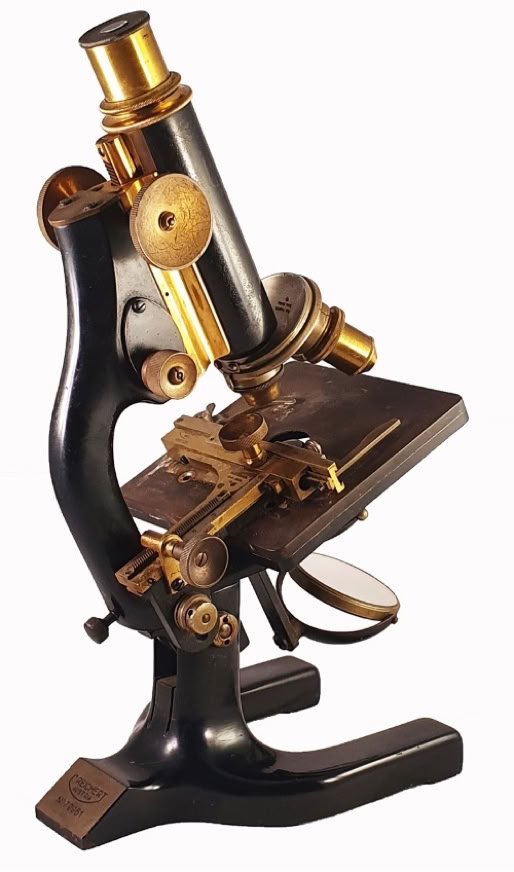
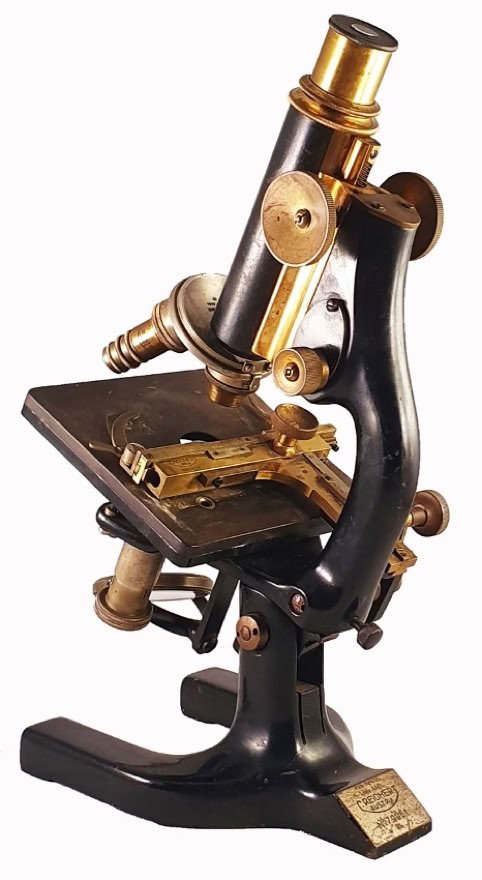
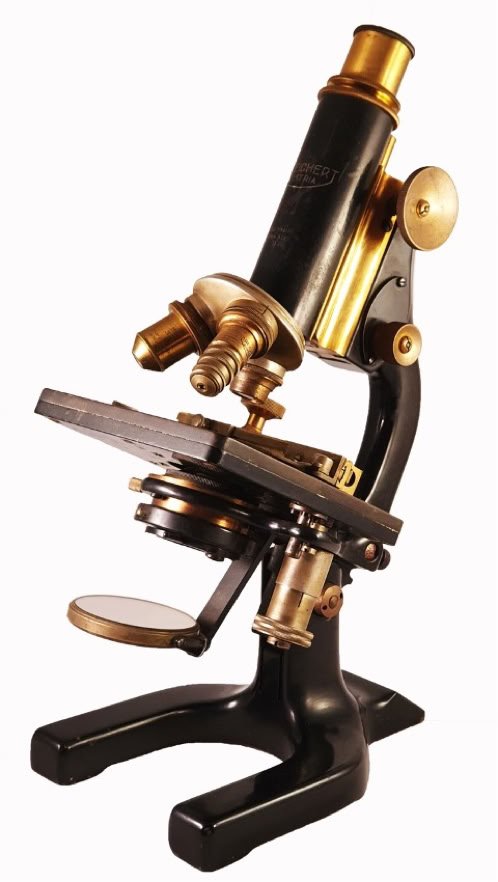
(C Reichert; microscope stand D, combination Dafne; c. 1925)
Carl Reichert (1851–1922) was an Austrian optician who established one of Europe's leading microscope manufacturing firms in the late nineteenth century. In 1874, he married into the Leitz family, becoming the son-in-law of Ernst Leitz. Two years later, in Vienna, he founded the company Optische Werke C. Reichert. He employed several technicians formerly associated with Leitz, which helps explain the similarities between Reichert's instruments and those manufactured by Ernst Leitz in Wetzlar, Germany. Reichert developed new lenses and microscope illumination equipment, as well as one of the earliest microscopes designed specifically for examining metal surfaces. By 1900, the company had manufactured 30,000 microscopes, and by 1930, production had reached 100,000 instruments. Reichert microscopes were generally signed C. Reichert, Wien. In 1962, the company was partially acquired by American Optical, which was taken over by Warner-Lambert in 1968. By 1986, Reichert had merged with Jung of Heidelberg and was subsequently sold to Cambridge Instruments. In 1990, Cambridge Instruments merged with Wild Leitz to form the Leica Group. In 1999, Reichert ceased manufacturing microscopes and concentrated on producing instruments for sample preparation for transmission electron microscopy.
Microscope 151 is a Stand D combination microscope, known as the Dafne model, and bears the inscription Reichert, Austria (Figure 1). Its serial number, 79961, suggests a date of manufacture around 1925. The instrument is equipped with a mechanical substage incorporating a condenser and a mechanical Reichert stage bearing the serial number 6323 (Figure 1). An inscription on the microscope's base suggests that it was once used by the Public Health Department of the University of Aberdeen.

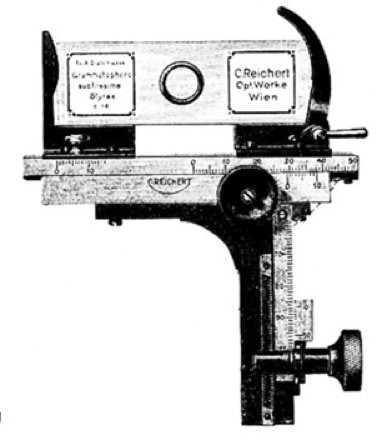
Figure 1. Reichert’s stand D combination Dafne microscope (left) and mechanical stage (right) as pictured in one of the 1940s firm catalogues.