

Microscope 409
(R & J Beck; Stereoscopic microscope Binomax; 1930s)
R. & J. Beck occupies an especially important place in the history of British microscope manufacturing. The company was established in London by Richard Beck (1827–1866), in association with James Smith (1800–1873), and was later joined by Richard's brother, Joseph Beck. Richard and Joseph Beck were nephews of Joseph Jackson Lister, a respected British optician and physicist who experimented with achromatic lenses and perfected the optical microscope. When commissioning the manufacture of his improved microscope, Lister worked with James Smith, an employee of the instrument-making firm of William Tulley, to produce the stand. James Smith subsequently established his own optical instruments workshop in 1837. Through this relationship, Lister arranged for his nephew Richard to become an apprentice to Smith in 1843. In 1847, James Smith entered into partnership with Richard Beck, and the company was renamed Smith & Beck. In 1854, following the admission of Richard's brother Joseph Beck to the company in 1851, the name was changed to Smith, Beck & Beck. James Smith retired in 1865, and the company became R. & J. Beck, a name that it retained for many years. In 1866, Richard Beck died at the relatively young age of 39, and Joseph Beck continued to run the business. In 1895, the company became a limited company (R. & J. Beck Ltd). By 1968, it had become a subsidiary of the American Ealing Corporation. In 2019, Beck Optronic Solutions Ltd was a descendant of the former R. & J. Beck Ltd. The company traded from several London addresses: 31 Cornhill (1865–1880), 68 Cornhill (1881–1944) and 69 Mortimer Street (1926–1962).
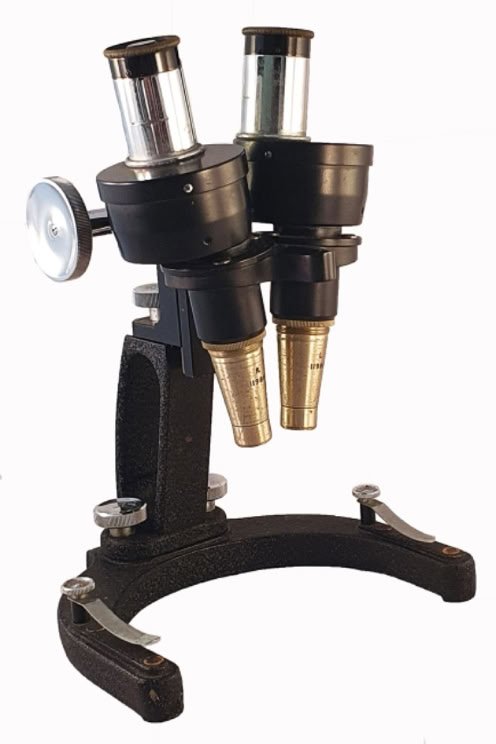
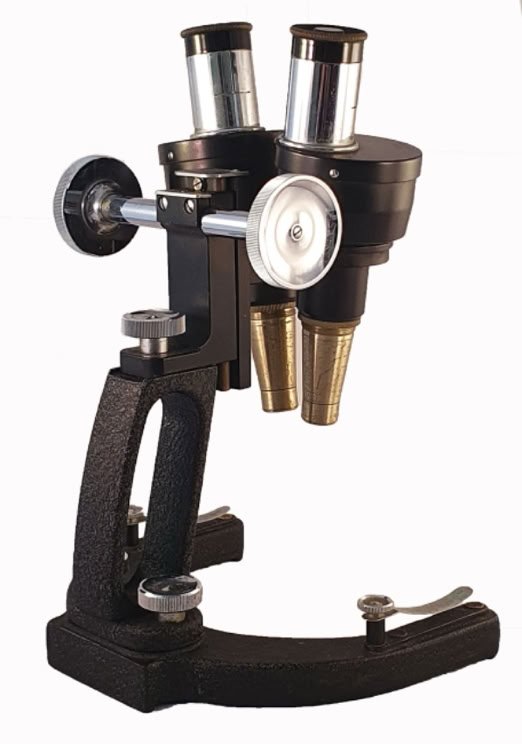
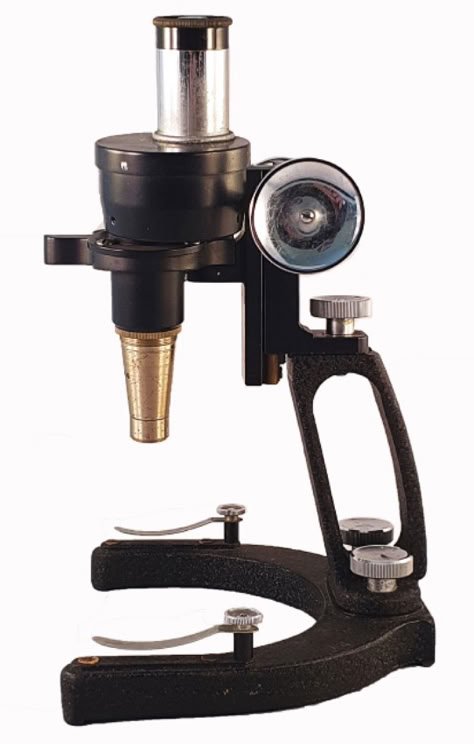
Microscope 409 is a Beck stereoscopic, low-magnification microscope, model Binomax (Figure 1), engraved with the serial number 11986. Both objectives bear the same serial number.
Note: This instrument was kindly donated by Dave Levell (Pembrokeshire, Wales) in May 2023.
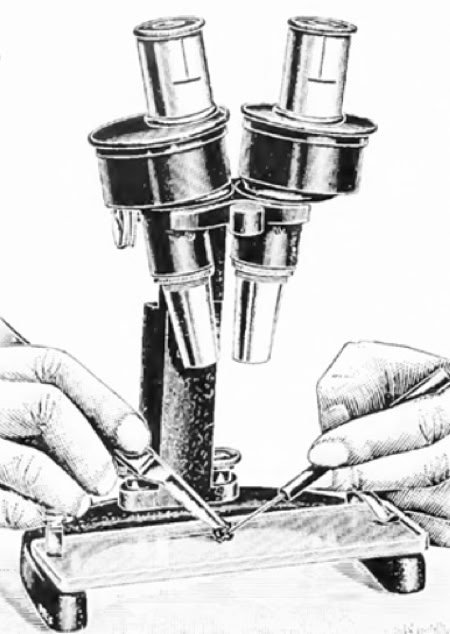
Figure 1. Beck’s low-magnification Binomax microscope as engraved in a 1930s catalogue of the firm.