
Microscope 484
(J Parkes & Son; Travelling or “The Prize” microscope; c. 1880)
Based in Birmingham, England, Parkes manufactured microscopes and a wide range of other scientific instruments, equipment and supplies from the mid-nineteenth century until well into the twentieth century. Recognising the growing market among students and middle-class amateur microscopists, the company concentrated on producing relatively inexpensive instruments. James Parkes established his business in 1815, initially manufacturing small items such as jewellery cases and other metal fittings. His only son, Samuel, joined him as a partner around 1846, and the business became J. Parkes and Son. By the 1850s, the company was producing a variety of microscopes, with its 1857 catalogue featuring microscopes and prepared slides prominently. Many examples of later models manufactured by J. Parkes and Son are known to have been sold through other retailers. Following James Parkes' death in 1877, Samuel continued to operate the business under the same name. After Samuel's death in 1896, his only son, also named Samuel, and his nephew, James Moulton, took over the business. Moulton left the partnership in 1908, after which Samuel T. H. Parkes continued to run the company alone for several more years, with the business still operating at least into the late 1920s.
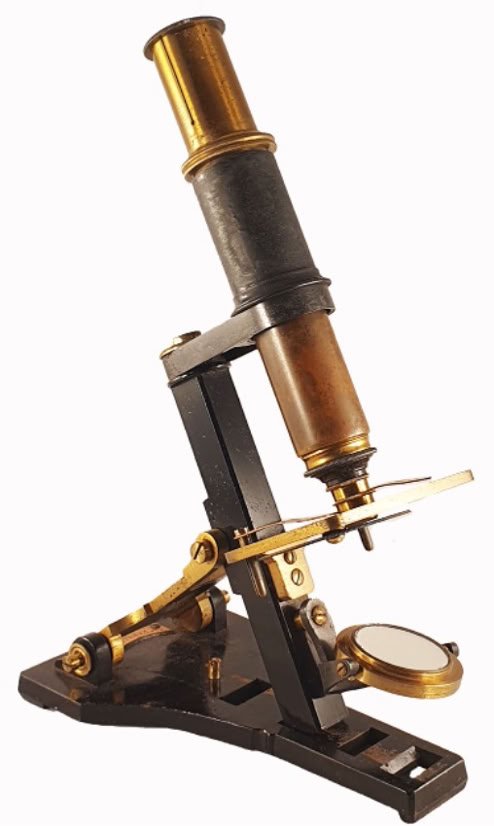
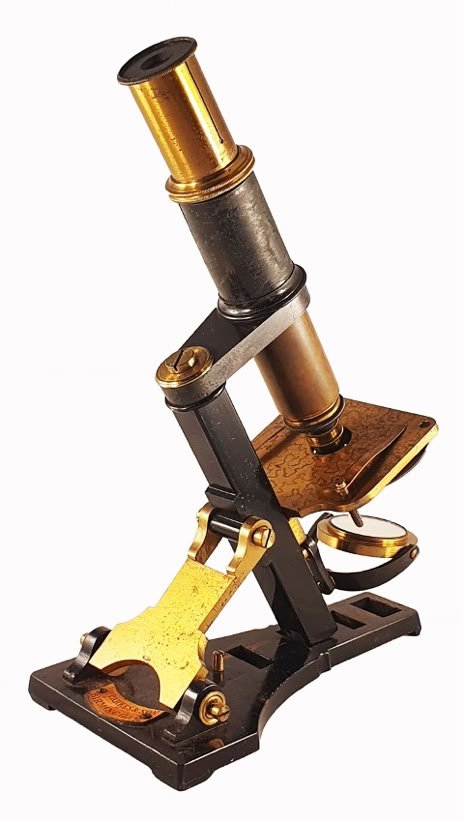
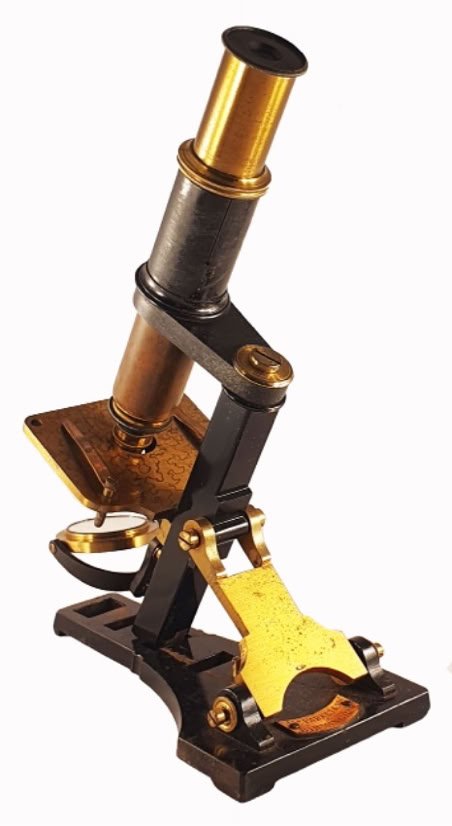
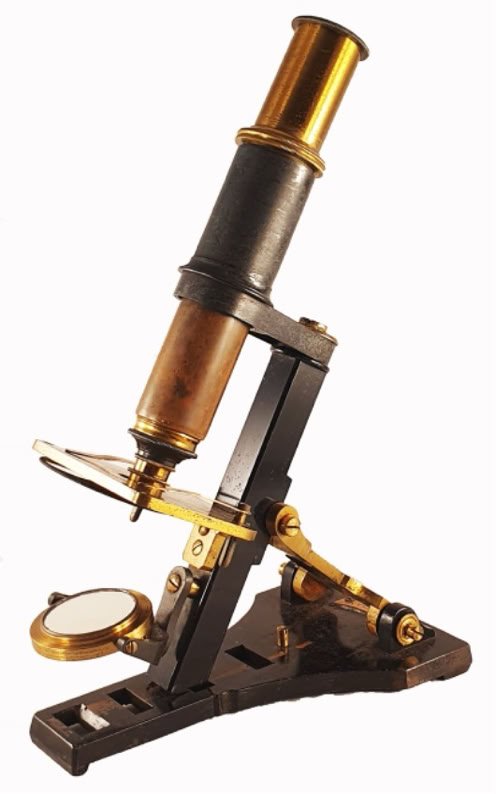
Microscope 484 is signed “JAS Parkes & Son, Birmingham” and is a travelling microscope, dating from approximately 1880. The instrument is housed in its original wooden case and is identical to the model known as The Prize microscope, illustrated in an 1889 catalogue published by Philip Harris (Figure 1).
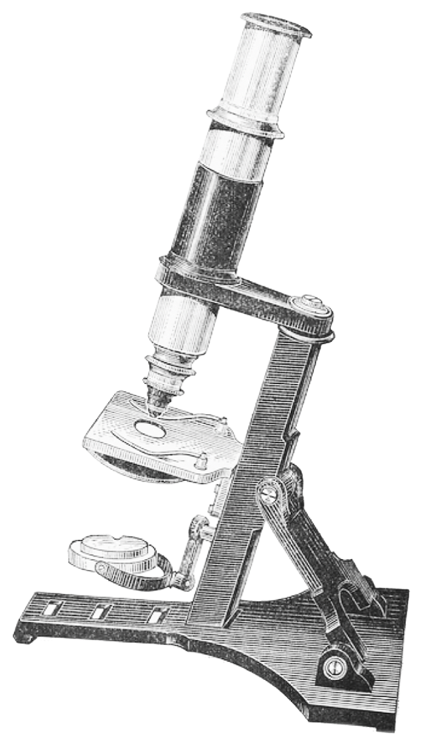
Figure 1. “The Prize” microscope as featured in an 1889 Philip Harris catalogue.