|








|
      
     
|
|
C
Reichert (Vienna, Austria)
Carl Reichert (1851 – 1922) was an
optician who established one of the principal microscope manufacturing
firms in Europe in the late 19th century. Reichert married into the Leitz
family in 1874 (and was son in law of Ernst Leitz). In 1876 in Vienna, he founded
the Optische Werke C. Reichert. He employed some Leitz technicians,
explaining one reason why his products were so similar to those of Ernst
Leitz of Wetzlar. Reichert designed new lenses, lighting equipment for
microscopes, and one of the first microscopes for the study of metal
surfaces. By 1900, the company had produced 30,000 microscopes, and 100,000
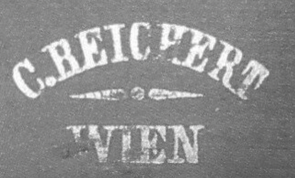
microscopes in 1930. Instruments were usually signed "C. Reichert,
Wien". The firm was partially sold to American Optical in 1962, which was
taken over in 1968 by Warner Lambert. By 1986, this company merged with
Jung of Heidelberg and was sold to Cambridge Instruments, which in 1990
merged with Wild Leitz to form the Leica Group. In 1999 Reichert stopped
microscope production, concentrating to instruments for sample preparations
for transmission electron microscopy.
|
|
|
|
|
|
|
|
|
|
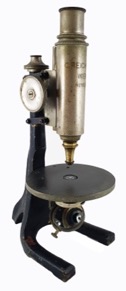
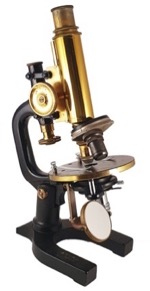
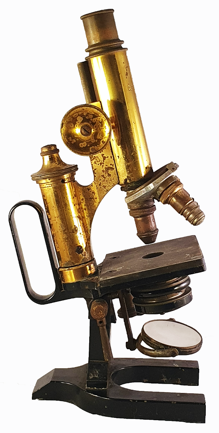
40 (C Reichert Wien; stand
VII microscope; 1898)
|
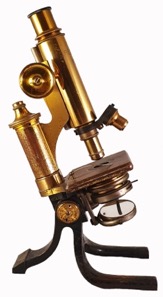
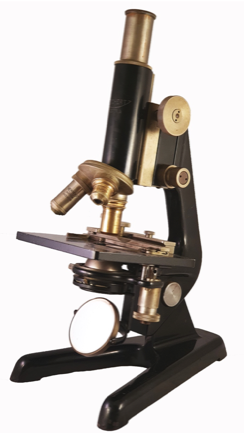
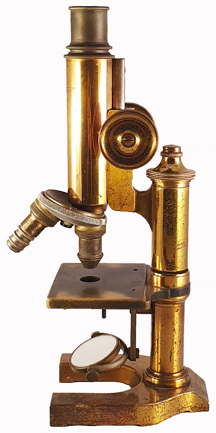
92 (C Reichert, Wien; 1899)
|
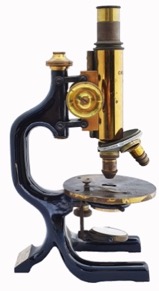
102 (C Reichert, Wien; 1910s)
|
28 (C Reichert Wien; 1912)
|
125 (C Reichert, Wien; c. 1935)
|
|
|
|
|
|
|
|
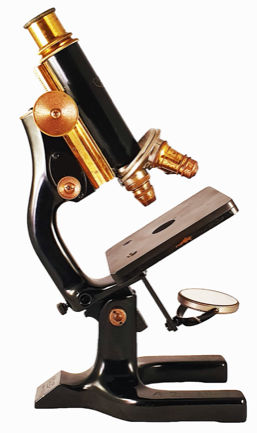
147 (C
Reichert; 1920s)
|
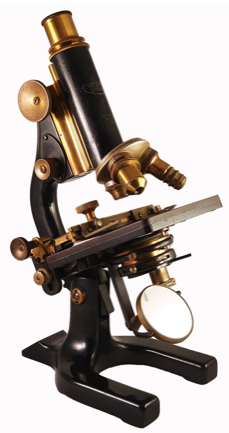
151 (C Reichert;
microscope stand D, combination Dafne; c. 1925)
|
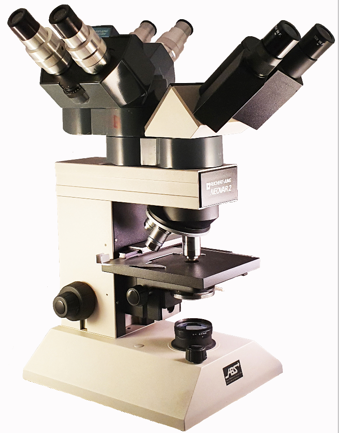
260 (C
Reichert; Neovar 2 microscope; late 1980s)
|
273
(Carl Reichert; medium stand III microscope; c. 1907)
|
305 (Carl
Reichert; c. 1905)
|
|
|
|
|
|
|
|
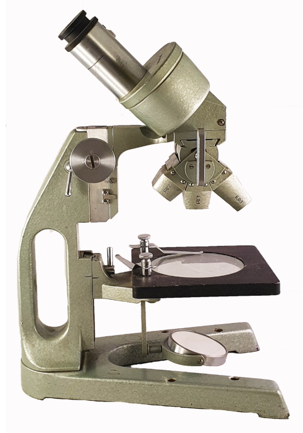
355 (Carl
Reichert; stereoscopic microscope MAK; 1950s)*
|
|
|
|
|
* Instrument kindly
donated by Dave Levell (Pembrokeshire, Wales) in May 2023
|
|
|
|
|
|
Carl
Schutz (Cassel, Germany)
The Schutz company was originally
founded c. 1900 in Cassel, by Carl Schutz, and specialised in binoculars,
microscopes and telescopes. The name was changed in 1912 from Carl Schutz
& Co to Carl Schutz Optische Werke AG. In the mid 1920s the company merged
with Ruf & Co to create Schutz Ruf & Co. Cassel (the spelling of
which was changed to Kassel in 1926).
|
|
|
|
|
|
|
|
|
|
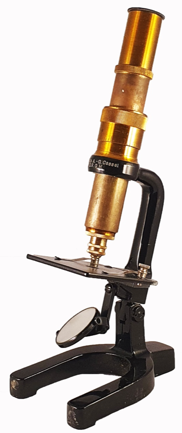
193 (Carl Schütz & Co; student microscope; early 20th
century)
|
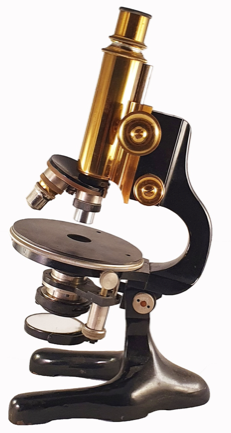
282 (Carl
Schütz & Co; 1910s)
|
|
|
|
|
|
|
|
|
|
Carl
Zeiss (Jena, Germany)
In 1846, Carl Zeiss opened a
workshop for precision mechanics and optical instruments in Jena. He
focused his activities more and more on microscope production. Soon he was
supplying not only the regional market but also shipping his wares around
the world. In 1866, Carl Zeiss recruited the physicist Ernst Abbe to help
him improve his microscopes. In 1877, Ernst Abbe became a partner in the
company. After the passing of Carl Zeiss in 1889, Ernst Abbe created the
Carl Zeiss Foundation, which would become the company’s sole owner. Since
the 1890s, Abbe’s findings and his style of working have also been adopted
in other fields of optics. This led to the creation of all-new products,
new business areas and rapid growth for the company. In 1893, the first
subsidiary was opened in London. Before the outbreak of WWI, sites were
established across the world, which then had to be closed when war broke
out. There were more ups and downs between then and 1945. Thereafter, the
sites outside Germany have been developing in a stable manner and today,
Carl Zeiss AG is a holding company with several subsidiaries. In addition
to its sites in Oberkochen and Jena, its main production sites are in
Wetzlar and Göttingen in Germany, Dublin and Minneapolis in the US, and
Shanghai in China.
|
|
|
|
|
|
|
|
|
|
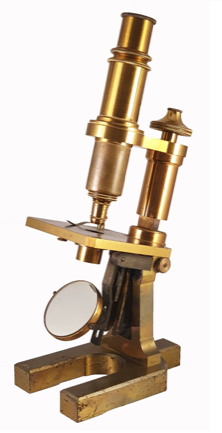
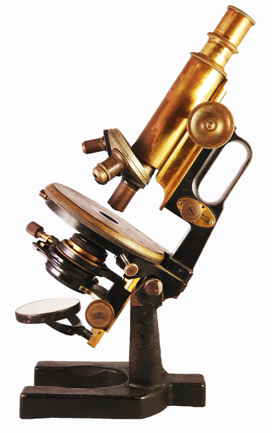
115 (Carl Zeiss; microscope
stand Va; 1886)
|
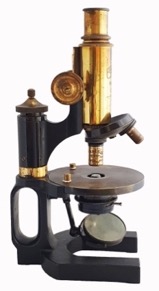
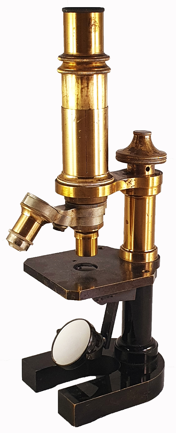
106 (Carl Zeiss; stand VB;
1920)
|
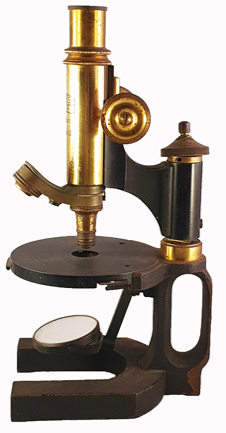
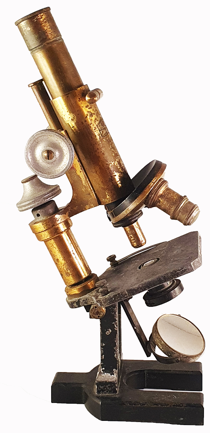
297
(Carl Zeiss; stand VB, non-inclinable microscope; c. 1910)
|
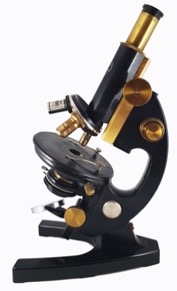
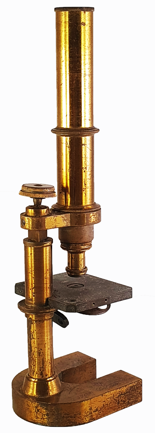
22 (Carl Zeiss; stand E SA;
1926)
|
145 (Carl Zeiss; stand III B;
c. 1915)
|
|
|
|
|
|
|
|
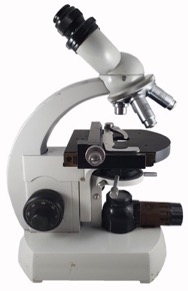
219 (Carl
Zeiss; microscope stand VII; c. 1900)
|
222 (Carl
Zeiss; microscope stand VI; 1910s)
|
275 (Carl
Zeiss; microscope stand VIII; c. 1882)
|
15 (Carl Zeiss Oberkochen;
standard stand K; 1971)
|
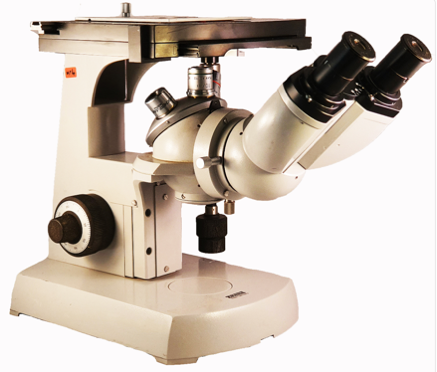
313 (Carl Zeiss;
microscope invertoscope D; 1980s)
|
|
|
|
|
|
|
|
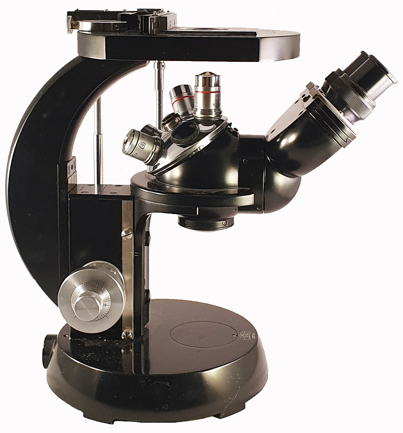
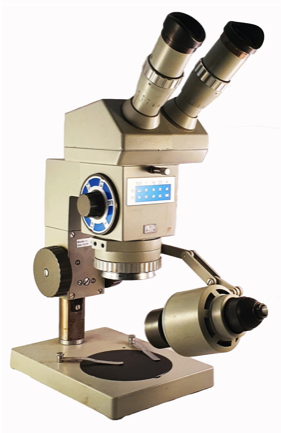
316 (Carl
Zeiss; inverted microscope; 1960s)
|
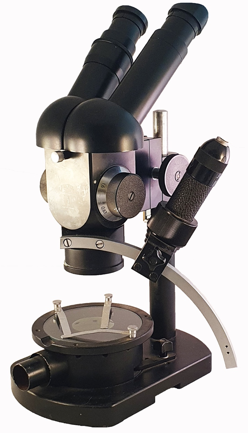
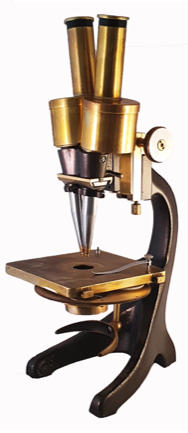
372 (Carl
Zeiss; stereo microscope SM XX; 1970s)*
|
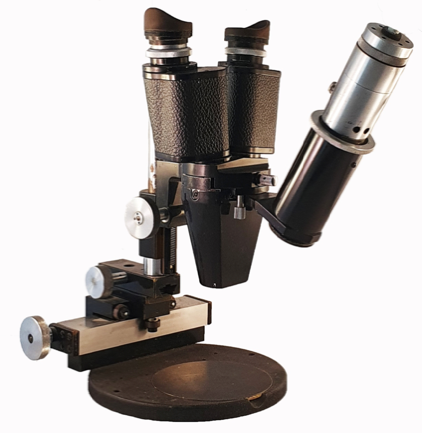
404 (Carl
Zeiss; stereo microscope Technival; c. 1977)*
|
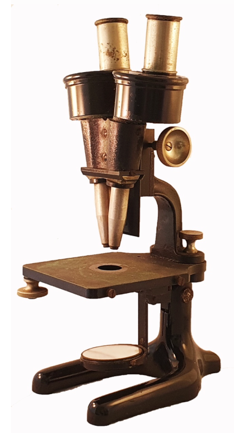
414 (Carl
Zeiss; Greenough binocular microscope stand XA; c. 1930)*
|
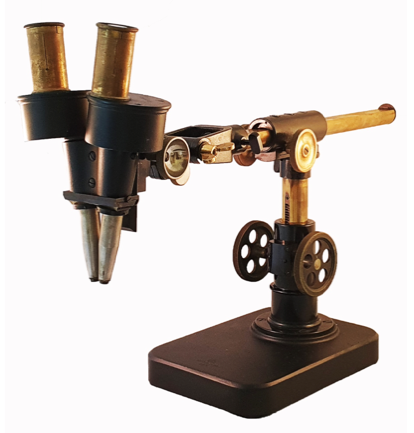
422 (Carl
Zeiss; binocular stand magnifier XII F; c. 1940)*
|
|
|
|
|
|
|
|
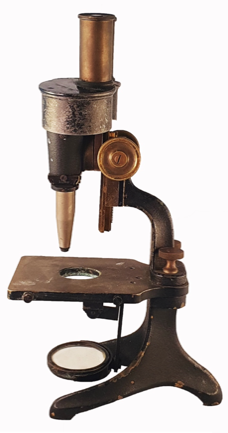
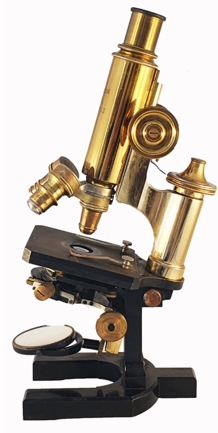
426 (Carl
Zeiss; Greenough’s binocular microscope, stand Xa; c. 1900)*
|
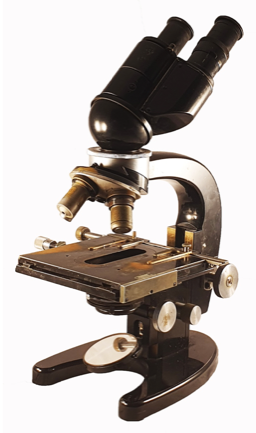
438 (Carl
Zeiss; Greenough’s binocular microscope, stand X; late 1930s)*
|
446 (Carl
Zeiss; binocular stand XB; c. 1912)*
|
513 (Carl
Zeiss; Stand IVa; c. 1905)
|
534 (Carl
Zeiss; binocular microscope stand LgOG; c. 1940)
|
|
|
|
|
|
|
|
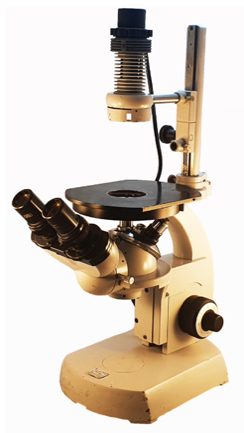
540 (Carl
Zeiss; inverted microscope; c. 1970)
|
|
|
|
|
* Instrument kindly
donated by Dave Levell (Pembrokeshire, Wales) in May 2023
|
|
|
|
|

|
Ernst
Leitz (Wetzlar, Germany)
In 1849, Karl Kellner founded the Optical
Institute in Wetzlar, Germany, which in a few years had microscopes as the
main product. The company hired an engineer named Ernst Leitz in 1865, who
soon became a partner. Leitz took over the company in 1869 and renamed it
Optical Institute of Ernst Leitz. Ernst Leitz died in 1920, and his son
Ernst Leitz II became the sole owner of the business. During the 1970s,
competition increased from several companies in Japan, especially Olympus
and Nikon, which were producing modern microscope designs of excellent
quality at relatively low prices. Several venerable microscope companies
closed, merged, or were bought out in Europe and the USA. Wild Heerbrugg
bought the majority ownership of the Leitz Wetzlar company in 1974, but
Leitz continued to develop their new lines of compound microscopes. The
last member of the Leitz family retired from the board of directors in
1986. At the beginning of 1987, Ernst Leitz Wetzlar GmbH and Wild Heerbrugg
AG merged to form the Wild Leitz Group. The Wild Leitz Group was broken
into smaller companies in 1988, and Leica Camera was split off. The merger
of Wild Leitz Holding AG with the Cambridge Instrument Company in 1990
created the new Leica Holding B.V. group. The Leica name is now used for
all microscopes and other scientific optical instruments.
|
|
|
|
|
|
|
|
|
|
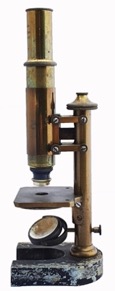
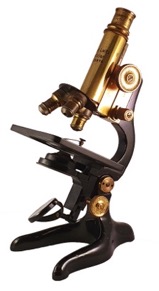
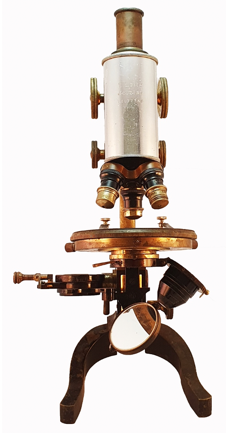
96 (Ernst Leitz; Stativ V
model; 1891)
|
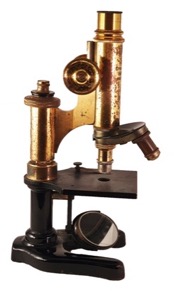
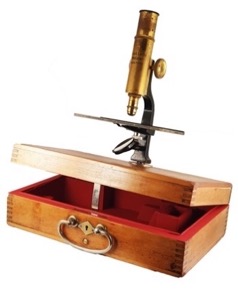
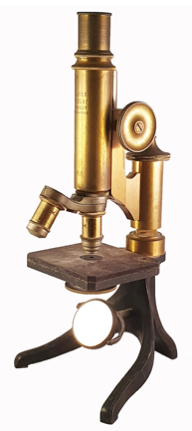
41 (Ernst Leitz, Wetzlar;
stand III microscope; late 1910s)
|
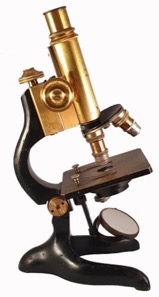
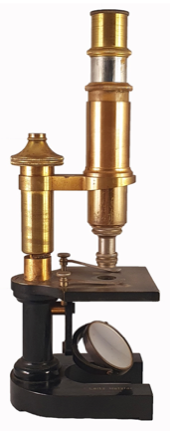
79 (Ernst Leitz; c. 1912)
|
75 (Ernst Leitz; Stativ GH
model; c. 1925)
|
8 (Ernst Leitz, Wetzlar; meat
inspector’s travelling microscope; late 1920s)
|
|
|
|
|
|
|
|
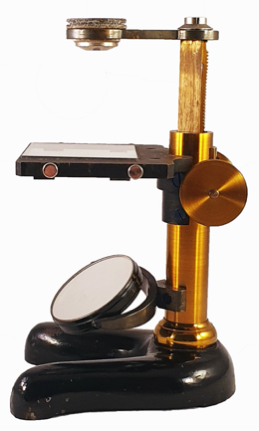
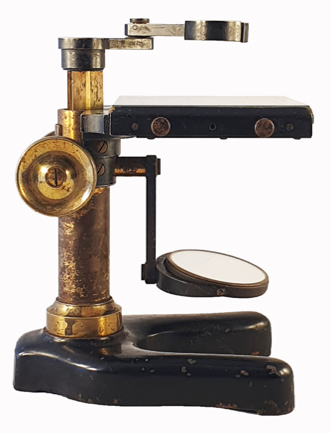
128 (Ernst Leitz; simple
dissecting microscope; early 20th century)
|
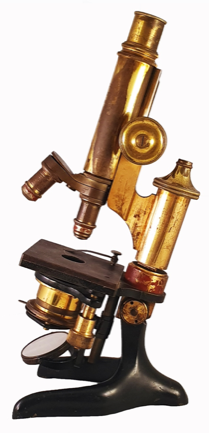
130 (Ernst Leitz, Wetzlar; microscope
stand IIb; c. 1907)
|
172 (Ernst
Leitz; universal microscope stand A; c. 1912)
|
184 (Ernst
Leitz; stand IIb microscope; c. 1896)
|
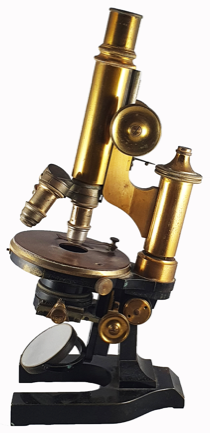
197 (Ernst
Leitz; microscope stand IV; c. 1913)
|
|
|

|
|
|
|
|
269 (Ernst
Leitz; microscope stand Ia; c. 1897)
|
319 (Ernst
Leitz; simple dissecting microscope; early 20th century)
|
460 (E. Leitz;
dissecting simple microscope; c. 1900)
|
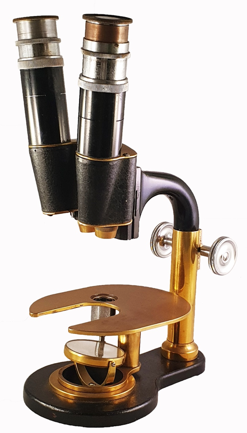
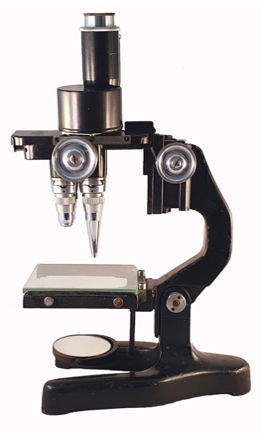
400 (Ernst
Leitz; stereo binocular microscope; 1930s)*
|
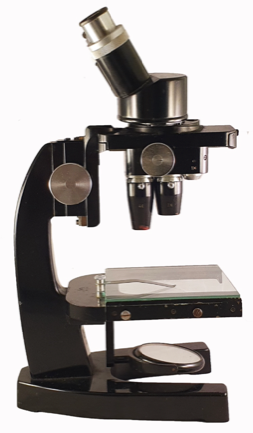
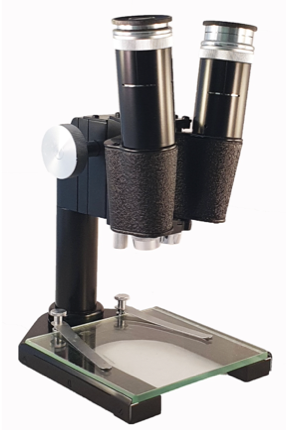
401 (Ernst
Leitz; stereoscopic binocular microscope; c. 1960)*
|
|
|
|
|
|
|
|
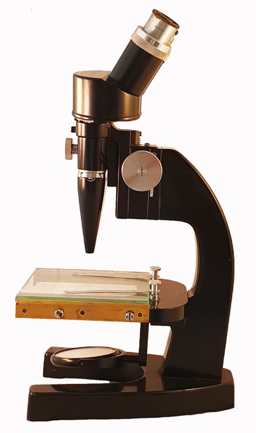
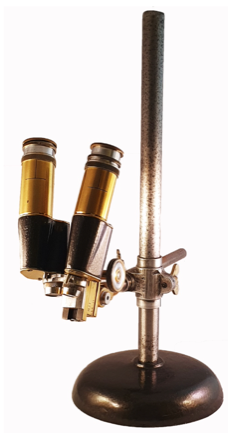
448 (Ernst
Leitz; stereoscopic binocular microscope; c. 1958)*
|
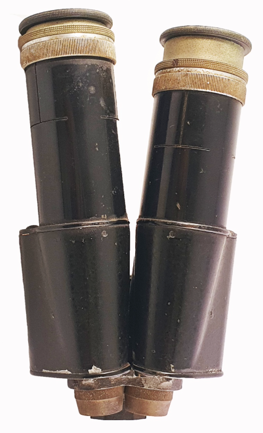
417 (Leitz;
stereoscopic binocular microscope Greenough; c. 1935)*
|
420 (E.
Leitz; stereo microscope; c. 1960)*
|
408 (Ernst
Leitz; stereoscopic binocular microscope; late 1930s)*
|
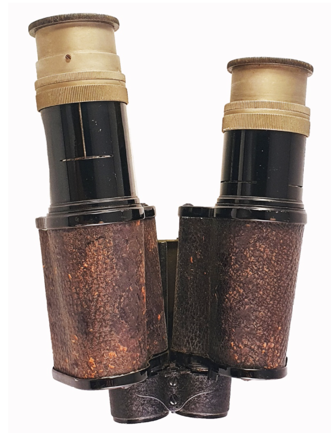
381 (Ernst
Leitz; stereo binocular head; mid-20th century)*
|
|
|
|
|
|
|
|
351 (Ernst
Leitz; stereo binocular head; 1940s - 1950s)*
|
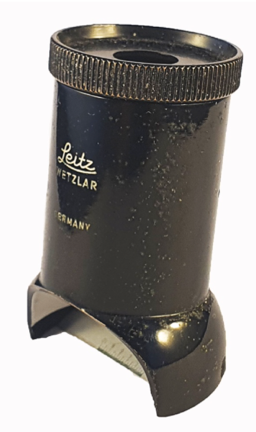
536 (Ernst
Leitz; measuring loupe; 1960s)
|
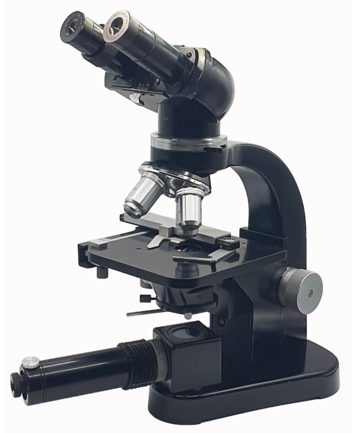
551 (Ernst
Leitz; SM medical microscope; c. 1969)**
|
|
|
* Instrument
kindly donated by Dave Levell (Pembrokeshire, Wales) in May 2023
** item kindly donated by Ian Maplesden
(Brighton, England) in March 2025
|
|
|
|
|
|
Emil
Busch (Rathenow, Germany)
Johann Heinrich August Duncker (1767
- 1843) began is optical instruments business in Rathenow, Germany, in
1792. Rathenow is known for its Rathenow stones, bricks made of the clay of
the Havel, and for its spectacles and optical instruments. Important early
products were lenses for microscopes, magnifying glasses and glasses as
well as astronomical telescopes and microscopes. Duncker's son Eduard (1797
- 1878) took over the company in 1819 and, in 1845, he passed the business
on to his nephew Emil Busch (1820 - 1888) as Optische Industrie-Anstalt,
Rathenow. In 1872, the business became Emil Busch AG. The company was
renamed Emil Busch AG Optische Industrie in 1908. Around that time, many
Busch products were labelled ROJA (Rathanower Optische Institute). Zeiss
became a majority shareholder in 1929, and Busch ceased making lenses. The
company became the state-owned Rathenower Optische Werke GmbH in 1946 and,
from 1948, VEB Rathenower Optische Werke (ROW), later becoming part of VEB
Carl Zeiss Jena.
|
|
|
|
|
|
|
|
|
|
188 (Emil Bush; simple compound microscope; c. 1915)
|
|
|
|
|
|
|
|
|
|
|
F
W Schieck (Berlin, Germany)
Friedrich Wilhelm Schieck (1790 –
1870; also, at times, spelled Schiek) was the first member of his family to
produce scientific instruments. After serving an apprenticeship, he moved
to Berlin where he worked with Carl Philipp Heinrich Pistor (1778 - 1847).
By 1824, he was a full partner with Pistor. At that time, instruments were
signed Pistor & Schiek. By 1837, the partners separated and Schiek
began to produce instruments under his own name; the microscopes were
usually marked “Schiek in Berlin”. Beginning around 1860, the father began
to work with his son, Friedrich Wilhelm Hermann Schieck, who by 1865
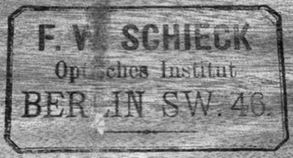
assumed full management of the firm under the name F. W. Schieck Optisches
Institut. The elder Schieck died in 1870. The son died in 1916, but the
firm continued well into the 20th century. F.W. Schiek produced high
quality research microscopes until 1865, when the business was taken over
by his son. Once the younger 'Schieck' took over he changed the focus of
the firm to higher volume and more basic microscopes. Like several other
German makers of the time, he especially sold microscopes for meat
inspection (trichinoscopes).
|
|
|
|
|
|
|
|
|
|
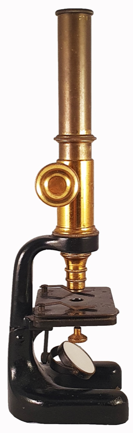
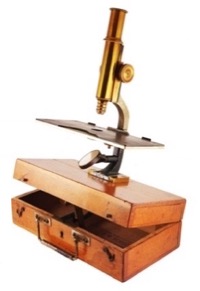
30 (F.W. Schieck; trichinen
mikroskop; c. 1900)
|
|
|
|
|
|
|
|
|
|
|
Frieseke
& Hoepfner (Erlangen, Germany)
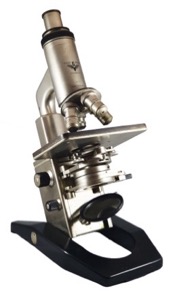
Frieseke & Hoepfner was
founded in 1939, in Erlangen (Germany) with the purpose of producing
aeronautical equipment. In 1945, the factory in Erlangen was used by the
Americans to repair and construct military vehicles. The company restarted
in 1948 producing hydraulics and control equipment and, in 1955, started
its integration in the FAG group in Schweinfurt. It is unclear when
Frieseke & Hoepfner decided to venture into microscope production and,
although the high quality of their microscopes, most probably this branch
of the business did not prosper as very few of their microscopes are known.
|
|
|
|
|
|
|
|
|
|
1 (Frieseke & Hoepfner;
c. 1950)
|
|
|
|
|
|
|
|
|
|
|
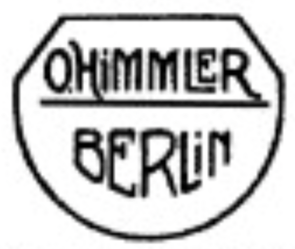
Otto
Himmler (Berlin, Germany)
Karl Otto Himmler was born in 1841
and was son of Karl Himmler, a shoemaker. Karl Otto Himmler worked for
Ernst Gundlach in Berlin, and later for Wilhelm and Heinrich Seibert in
Wetzlar, before establishing his own firm named Himmler & Barthning in
Berlin in 1877. After a few years the company was just Otto Himmler, and
manufactured microscopes and their accessories, and equipment for
microphotography and projection. Himmler made also the first contact lenses
to correct high myopia, after an order from August Muller in 1889. Karl
Otto Himmler died at the age of 61 years, in 1903. Himmler’s firm traded
from Simeonstrasse 27 (1879 – 1886), Brandenburgstrasse 9 (1887 – 1903) and
Oranienburgerstrasse 65 N24 (1904 – 1943; the move to this address took
place almost one year after Himmler’s death and his widow, Alwine Himmler,
was listed as owner of the firm).
|
|
|
|
|
|
|
|
|
|
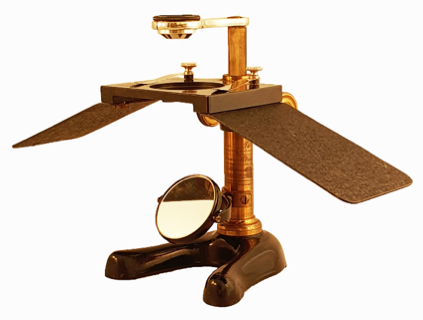
213 (Otto
Himmler; Dissecting microscope; early 20th century)
|
|
|
|
|
|
|
|
|
|
|
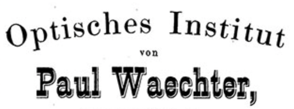
Paul
Waechter (Wetzlar, Germany)
Paul Waechter (1847 - 1893) was
trained to be an optician and mechanic at the famous Zeiss Optical Workshop
in Jena, Germany. In 1872, Waechter founded his own optical workshop and
his earlier instruments were signed ‘Paul Waechter, Berlin’. Between 1872
and 1892, Waechter produced over 20,000 microscopes, mostly for the
examination of trichinae in meat. By 1890, Paul Waechter moved his workshop
to Friedenau and the microscopes produced were then signed ‘Paul Waechter,
Friedenau’. After the death of Waechter in 1893, his longtime assistant,
Herr Puchler, directed the company. Later, Puchler and another master
mechanic, Paul Prasser, formed a partnership and continued the business
into the early 20th century. At this time, the business was named ‘Optische
Werkstaette Paul Waechter’. Microscopes produced by the company often did
not bear a signature or serial number on the microscope itself, but these
items were reserved for the wood case that normally accompanied the
instrument. Sometime after the turn of the century, the firm was moved from
Berlin to Potsdam in the former German State of Prussia (now Poland). At
that time, instruments were signed ‘Paul Waechter, Potsdam’. By the
mid-1930s the business was taken over by the Pridat family. Operations of
the firm appear to have been suspended during and immediately after the
Second World War. In 1958, the company again reappeared when their
registered office moved to Wetzlar, Germany. Microscopes produced in the
1960s and 1970s were signed ‘P. Waechter, Wetzlar’.
|
|
|
|
|
|
|
|
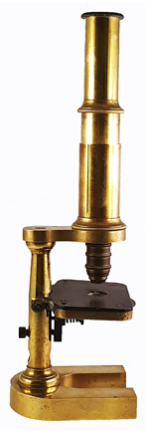
|
|
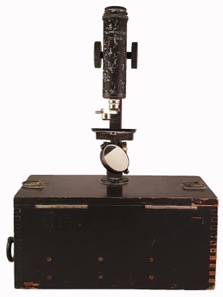
82 (Paul Waechter;
trichinoscope; 1920s)
|
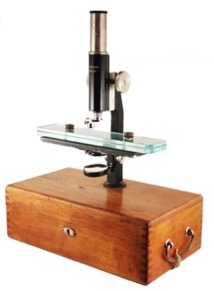
33 (Paul Waechter;
trichinoscope; c. 1960)
|
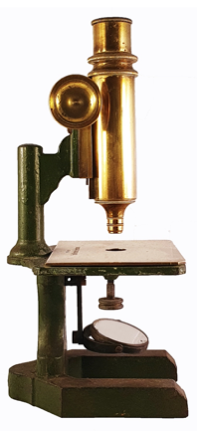
201
(Paul Waechter; trichinoscope, stand Va; c. 1900)
|
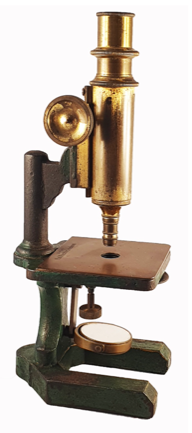
527 (Paul
Waechter; microscope – trichinoscope - stand Va; c. 1905)
|
210
(assigned to Paul Waechter; stand IV (V) microscope c. 1900)
|
|
|
|
|
|
|
|
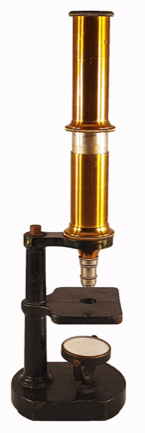
|
|
|
|
|
|
464 (Paul Waechter; microscope
stand IX; c. 1885)
|
|
|
|
|
|
|
|
|
|
|
R
Fuess (Berlin, Germany)
Rudolph Fuess was an instrument
maker from Hanover, Germany. In 1860, Rudolf moved to Hamburg and started a
company four years later, producing microscopes and other scientific
instruments. Rudolf was one of the founders of the Imperial Physical and
Technical Institute in 1881. He bought the glass manufacturer Greiner &
Geissler in 1877, expanding the range of his products, and built a factory
in Berlin (Steglitz) in 1891. Rudolf’s son Paul Fuess took over running the
company in 1913. In 1932, the company opened an American office in New York
City under the name of R. Fuess, Inc. In 1936, another branch was opened in
Potsdam (this branch principally made aviation instruments). Work came to a
standstill with the defeat of Germany in World War II and the partition of
the country, but production resumed in 1948 or 1949. The firm was dissolved
in 1976.
|
|
|
|
|
|
|
|
|
|
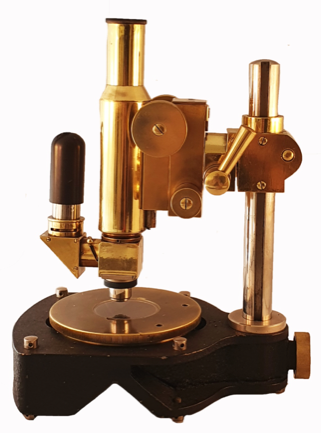
430 (Fuess;
metallurgical microscope; c. 1930)*
|
|
|
|
|
* Instrument kindly donated by Dave Levell
(Pembrokeshire, Wales) in May 2023
|
|
|
|
|

|
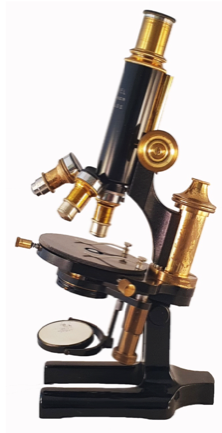
R
Winkel (Gottingen, Germany)
Rudolf Winkel started his microscope
manufacturing company in 1857 in Gottingen, Germany. In 1858, he took F. G.
Voigt as an apprentice, who later also started the firm Voigt &
Hochgesang (in 1869). By 1880, Rudolf’s three sons were working in the
company. After Rudolf’s death in 1905, the sons continued with the company,
expanded the product range, and started mass production. By 1911, Carl
Zeiss was a major shareholder of Winkel, and the company was incorporated
as R. Winkel GmbH. In 1957, the company became part of the Carl Zeiss
Foundation.
|
|
|
|
|
|
|
|
|
|
423 (R.
Winkel; continental type microscope; 1917)*
|
|
|
|
|
* Instrument kindly
donated by Dave Levell (Pembrokeshire, Wales) in May 2023
|
|
|
|
|
|
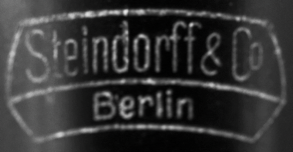
Steindorff
& Co (Berlin, Germany)
The mechanic Emil Steindorff
started producing scientific instruments on Reichenberger Straße, Berlin in
1879. In 1915, Otto and Emil Steindorff are both owners of the company.
Otto Steindorff was a mechanic as well. In 1925, the company’s head office
was located on Lindenstraße, Berlin. The firm was named Steindorff &
Co. Possibly, the future owner Julius Kaiser joined the firm at that time.
Two years later, the firm traded under the name ‘Optisch Mechanische Fabrik
Steindorff & Co’. Since then,
the firm’s head office was located on Köpenicker Straße, Berlin. In 1951, a
firm named ‘Steindorff of America Inc’ was founded in the USA to distribute
their microscopes in that country. The company celebrated its 75th
anniversary in 1954 with 80 staff members. The factory was then located at
Paul-Lincke-Ufer, Berlin. In the 1980’s, the firm was named ‘Optisch
Mechanische Fabrik Steindorff & Co GmbH’, and finally goes bankrupt in
1986.
|
|
|
|
|
|
|
|
|
|
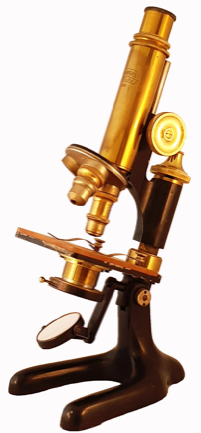
110 (Steindorff & Co; early
20th century)
|
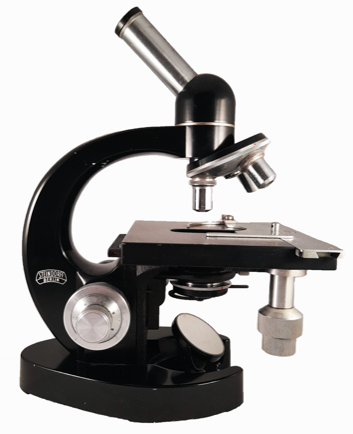
162 (Steinforff
& Co; c. 1960)
|
|
|
|
|
|
|
|
|
|
W
& H Seibert (Wetzlar, Germany)
Wilhelm
and Heinrich Seibert were brothers who worked for Carl Kellner’s optical
business in the 1850s, in Wetzlar, together with Ernst Gundlach. In 1859,
Gundlach started his own microscope manufacturing firm, and the Seibert
brothers also joined this company as employees. This company entered in
debt and Gundlach left for England in 1860. Later, in 1865, Gundlach
returned and, this time in Berlin, he started a new optical firm to which
the Seibert brothers also joined in about 1866. In 1872, the Seibert brothers
joined Georg Krafft and bought the firm from Gundlach, and he emigrated to
the USA. The firm moved to Wetzlar and was initially named Seibert &
Krafft (1871 – 1884). In 1884, the firm changed the name to W & H
Seibert and operated until c. 1925.
|
|
|
|
|
|
|
|
|
|
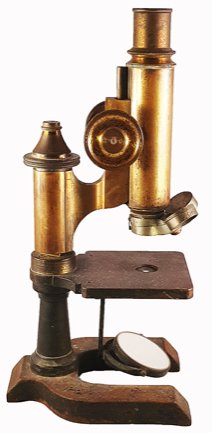
306 (W & H Seibert, student microscope, 1910s)
|
|
|
|
|
|
|
|
|
|

